post 003 – cold winner
i want to say that i got into tennis before i saw challengers, but that would be a lie. rather than the movie itself sparking my interest in the sport, it was the coverage i saw online that did it for me. i watched countless sports creators give the “yep! this is pretty realistic!” stamp of approval on the film, and i felt just moved enough to watch the tour’s remaining competitions that year with a well-meaning, observant eye.
while getting situated in the clay swing that summer, i quickly learned the three titans of the men’s tennis: novak djokovic, roger federer, and rafael nadal—all achieving ludicrous feats during their careers that are still used as the standard to assess promising young talent coming up on the atp tour. for djovokic, he’s won the most number of most grand slams (i.e., the four most prestigious annual events in the sport taking place across oceania, europe, and north america) out of any male tennis athlete. and what’s crazy is that he’s still currently alive and kicking on tour now, albeit at a fraction of what his prime level was… no shade! federer made a name for himself with his elegant one-handed backhand, a still uncommon tennis stroke, which added better angles, potential pace redirection, and shot variety to his game, resulting in dominant winning streaks on hard courts in the early 2000s. he was also just so effortlessly cool, most evidenced by his laid back practice sessions which felt more like a performance to patrons walking by. nadal was the undisputed king of clay, winning the majority of roland-garros titles during his tenure on the atp tour by absolutely suffocating opponents with his topspin-heavy shots rotating almost 300 times per minute.
as you can deduce from the spiel above, tennis is not played on the same surface all season and its been like that basically since its inception. due to the varied climates and naturally abundant resources, certain materials were easier to maintain for play, with europe primarily supporting clay and grass, with hard courts reserved for the states. characterized by its long-standing tradition in the fields of england, grass courts are fast with low-bouncing balls and has been the favorite amongst serve-and-volley players. since it rewards more aggressive tactics towards the net, most grass court rallies before the 2010s were in the single digits. this is the sort of tennis you see on tv when they’re “moving through history” to situate us into the grand slam final we’re tuning into. for clay courts, there’s slow pace and higher bounce with the material itself mitigating big serves and heavy shorts placed awkwardly around the court. this surface also exposes weakness in movement as you can literally slide across the court to retrieve balls—or you end up falling, getting dirt stains all over your clothes to add drama. for hard courts, it’s durable acrylic surface is suited for both professional and recreational players, producing a medium-pace playing experience—but depending on the altitude, weather, and ball quality, it can feel completely foreign between match reps.
although there are loyal fans that think these three players made tennis and once all of them retire, the sport will die with it. however, that does not seem to be the attitude of the average viewer engaging with discourse online. the new athletes playing today are aware of the legacy of those that came before them, catalyzing the overall effort to push this sport to its physical limits. the undisputed stars of the status quo, alcaraz and sinner, are trying their absolute best to beat records set by the greatest. for the former, he just become the youngest player to complete the career slam by winning the australian open, roland-garros, wimbledon, and the us open all before turning 23. for the latter, he set a new record for the most consecutive sets won at the masters 1000 level (i.e., the tournaments that sit right below the grand slams) and to add even more insult to injury, these two are absolutely dominating the tour in ways that are unprecedented—drawing direct comparisons to the goats of the sport. alcaraz and sinner are exceeding the total points of the rest of the atp top 8 at a combined 26k each almost spilt evenly down the middle. while some fans are tired of seeing at least one of these two take every major title away from their competitors, i know i’m definitely not. do you think commentators were lamenting about how they wish they saw more players winning titles during federer’s 41-match winning streak in 2006-07? i certainly hope not! we are quite literally the audience to new spectacles of the sport! soon these moments we’re living in will be referenced in segments in future broadcasts, still unable to figure out how one athlete can stand so far ahead of his peers.
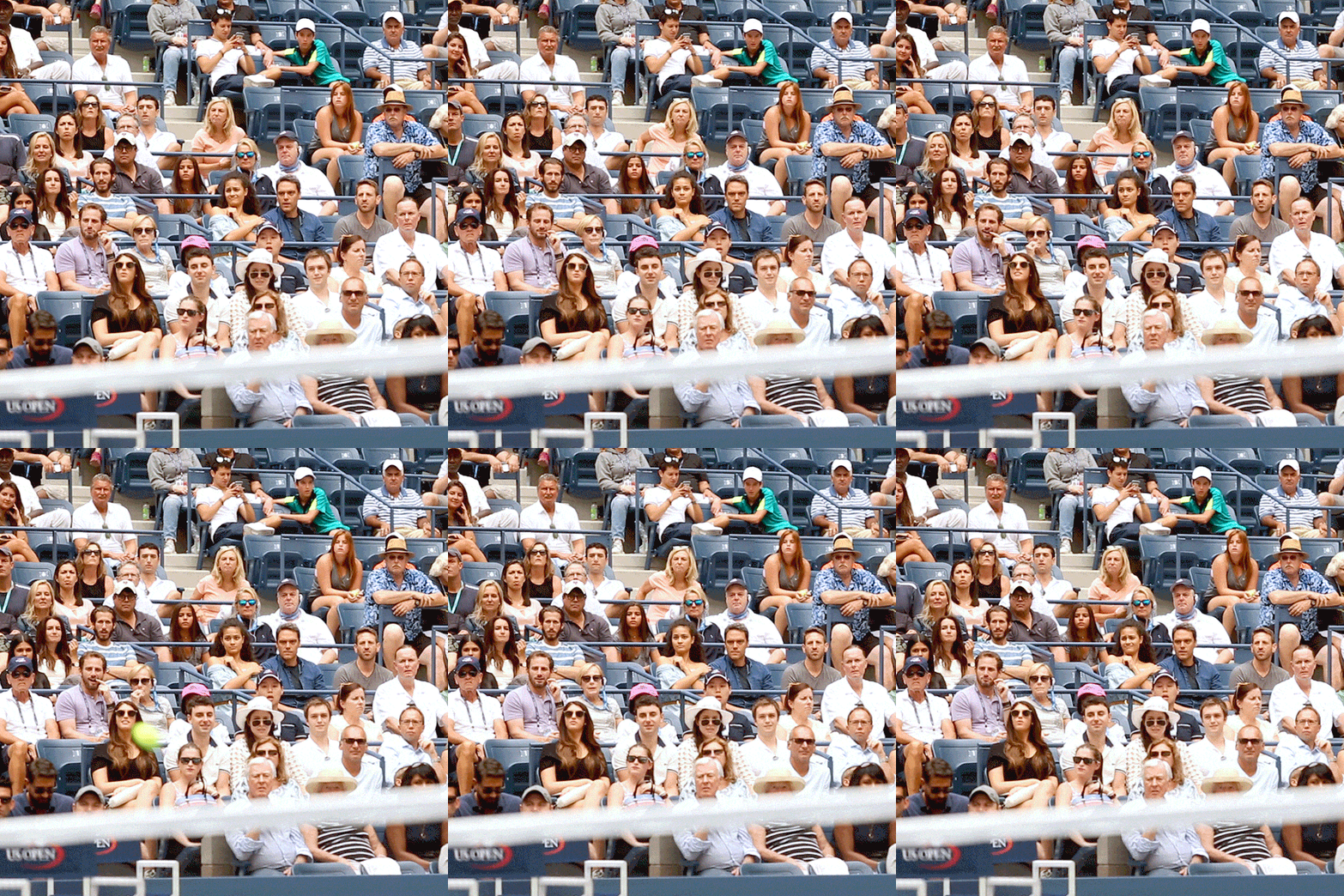
i was also drawn to the distinct fashion tennis has to offer and how it intertwined with the actual equipment they use on court. athletes are adorned in (hopefully) sponsored uniforms from the likes of adidas, nike, wilson, and likely any brand you can find at dick’s. depending on their ranking, they might have custom colorways that are tournament specific—these fabrics becoming relics of a specific point in a tennis career—even better if they’re dressing the winner of the whole thing.
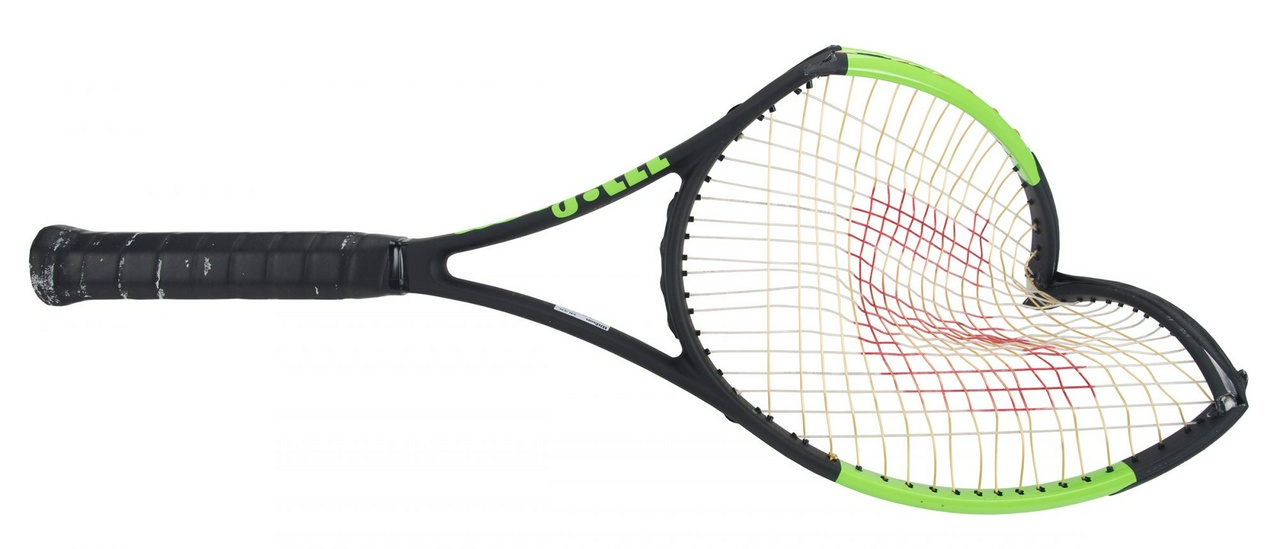
it’s also interesting how specific rackets are tied to particular game styles, a fact that makes more sense when you realize that the strings are the only contact a player has with the ball. wilson’s line of rackets are most closely associated with that classic, controlled play suited for all courts. serena williams played with blade for most of her time on tour, using it to push her already dominant serve farther into the court and become the personification of first-strike tennis. head rackets are tuned for high-end precision with a material called graphene, which allows for weight redistribution across the head and handle. yonex players are known to be clean ball strikers and care about comfort first, ideally getting a balance between power and feel every shot. babolot has been linked to enabling topspin and aggressive baseline rallies, still remaining as one of the most popular brands on tour. there are some miscellaneous brands still being used (e.g., diadem, prokennex, solinco) that can catch your eye, but i’m mostly noticing the specific combinations of grip colors and paint jobs adorning the rackets of players as they move through the court.
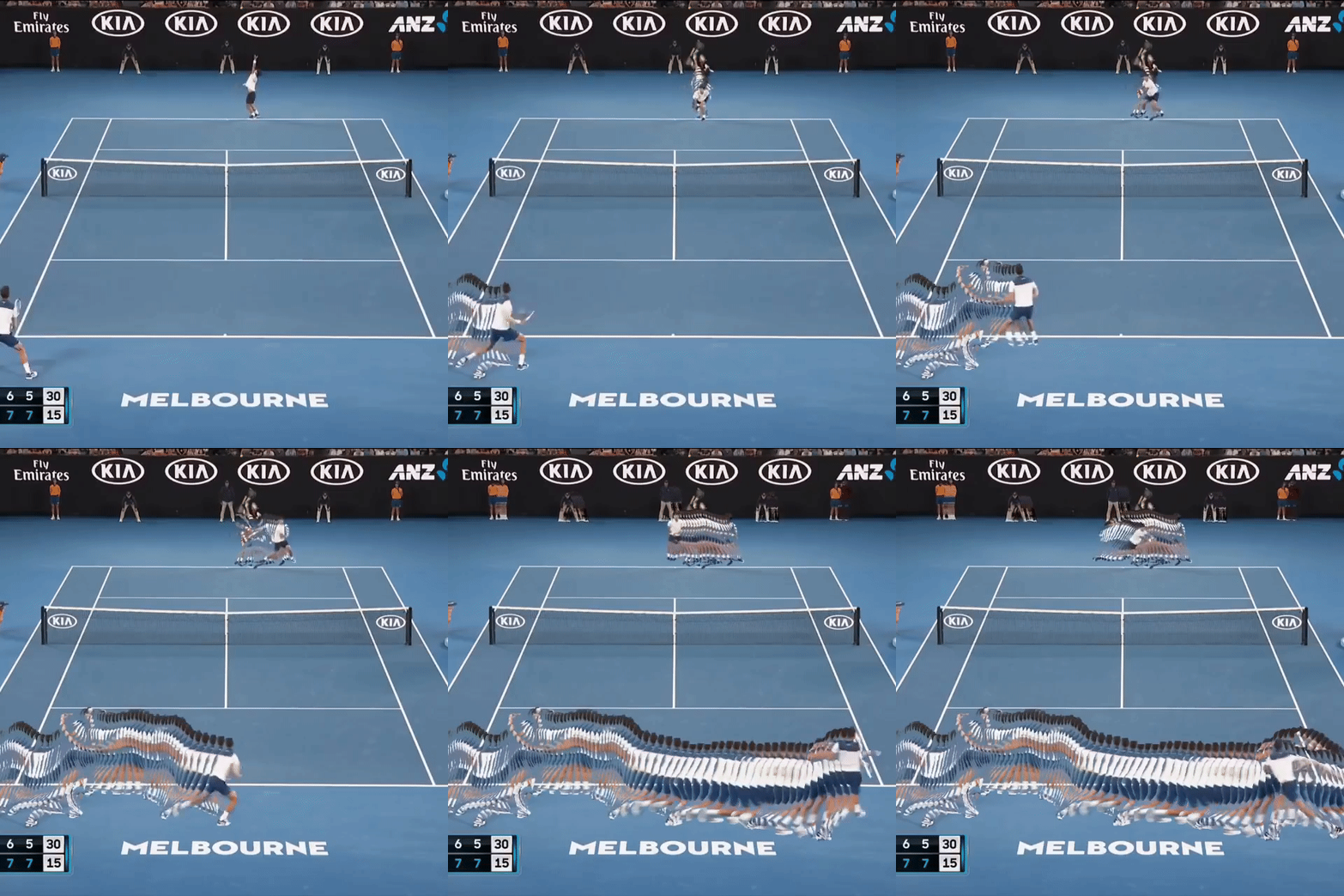
while watching tennis players (or any athlete, really) grapple with their own aging muscles, i can feel the tension these players have with their bodies in real-time. their reflexes aren’t razor sharp. the gravity seems to be pulling limbs closer to the ground. your strikes less potent than normal. i understand why many retired players don’t pick up a racket for months after their last match—like maria sharapova said: why would i want to to be lower than the best?
i am writing this in the middle of madrid and the narratives that have yet to take shape have me on the edge of my seat: will jodar back up his win against fonseca to make a deep run? is this clay season for him only a flash in the pan? will sinner win his sinner win his fifth (yes, fifth) masters 1000 title in a row and the french open now that there’s a vacuum left my alcaraz’s departure due to injury? will sabalenka continue to make history of her own as the rightful world number one on the women’s side? who knows? but i’m grateful i can watch time unfold so spontaneously in front of me.